
October 17, 2026 · Pietrasanta
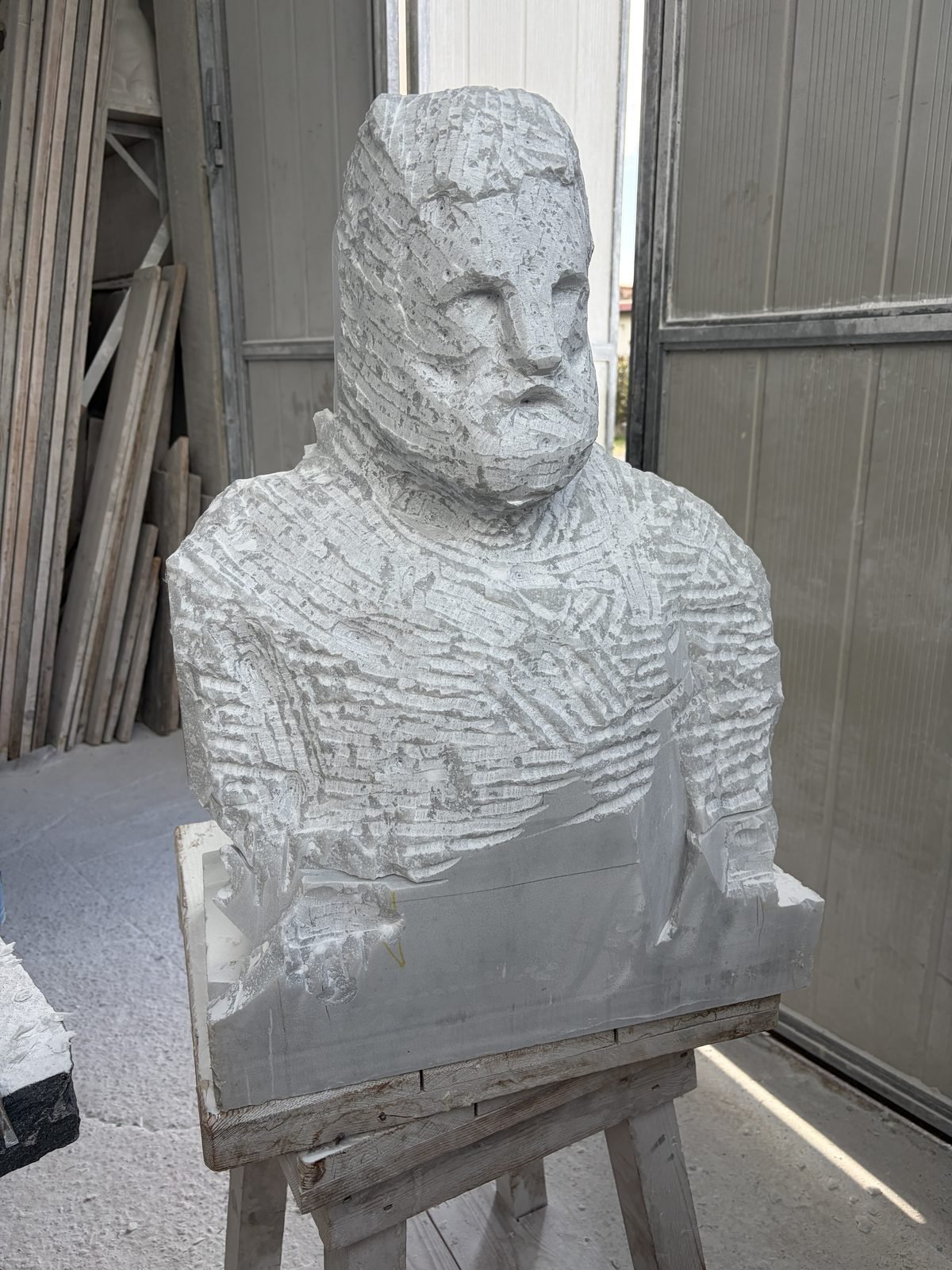
Three days after the first cuts, the block has a face.
Not a finished one. At this stage the marble is covered in the short parallel furrows left by the gradina, the claw chisel, as if the portrait were drawn in corduroy. The nose is there, the brow is there, the beard is a mass that knows roughly where it ends. Everything is close, and nothing is exact.
The model and the stone
In the workshop the two stand side by side: the smooth model on the left, the rough marble on the right, both facing the same way. Alberto moves between them all day, callipers in hand, and the distance between the two shrinks by a few millimetres at a time.
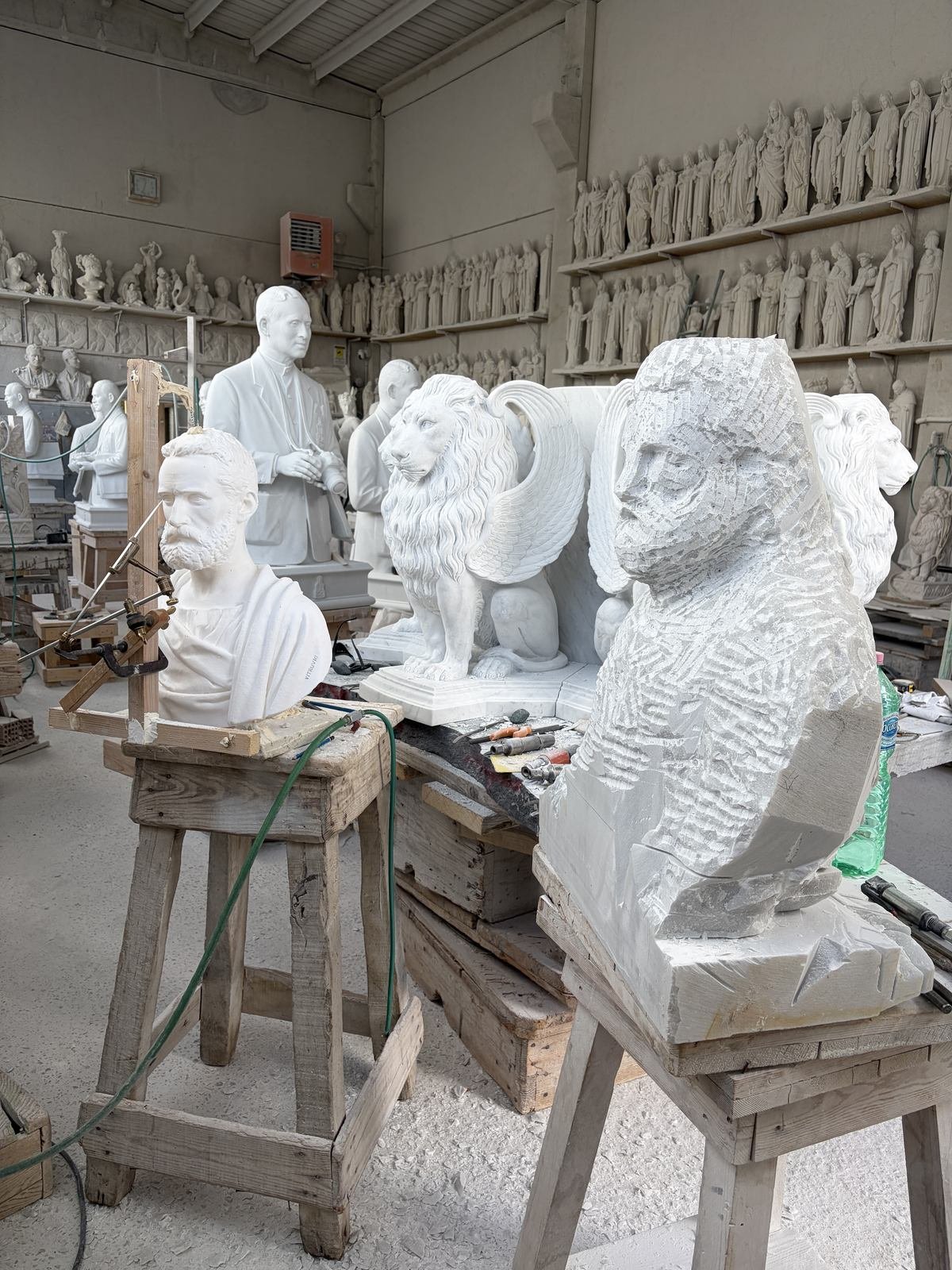
This is the part no photograph makes look impressive, and the part that decides whether the portrait will live. A face carries almost all its likeness in a handful of places: the ridge of the brow, the set of the eyes, the line where the beard meets the cheek. Miss one by a few millimetres and the man becomes someone else.
Why we leave the marks
The furrows stay for now. They are the sculptor’s way of keeping track: as long as the surface is textured, the eye reads volume rather than detail, and the whole head can be judged as a mass. The smooth surface comes last, when there is nothing left to correct.
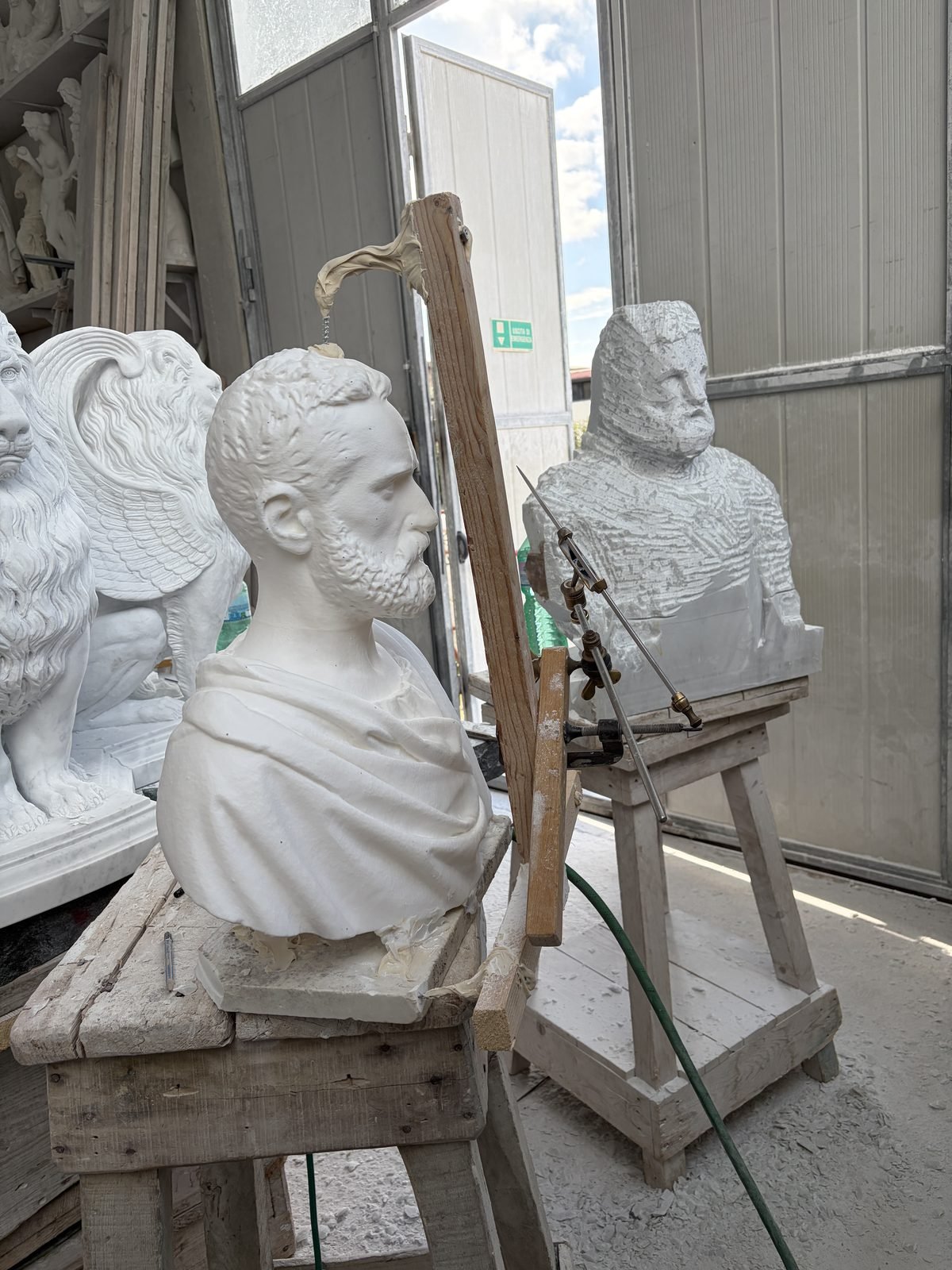
Behind him in the workshop stand the lions, the saints and the portraits of other commissions, each at its own stage. Vitruvius will take his place among them until the toga falls properly and the beard finds its curls.
Next
In Part III, the chisels get finer, and the architect starts to look at us.
Interested in a portrait or a custom marble sculpture of your own? Commission a sculptor and speak directly with Alberto.